
Know Your Rights at Work
This content is intended to serve as general information only. It is not legal advice, nor is it intended as legal advice.
Regardless of your immigration status, you have guaranteed rights under the US Constitution. You have the right to remain silent and do not have to answer questions about where you were born or your immigration status. You have the right to be free from searches or detention without just cause. And you have the right to hold law enforcement accountable.
These rights apply to every worker, regardless of immigration status. The constitutional protections that govern searches and seizures, self-incrimination, and due process do not disappear at the workplace door. Knowing them before an encounter is far more valuable than trying to remember them in the middle of one.
I WISH TO REMAIN SILENT.
Say these exact words clearly to any officer who asks you questions about your immigration status or place of birth.
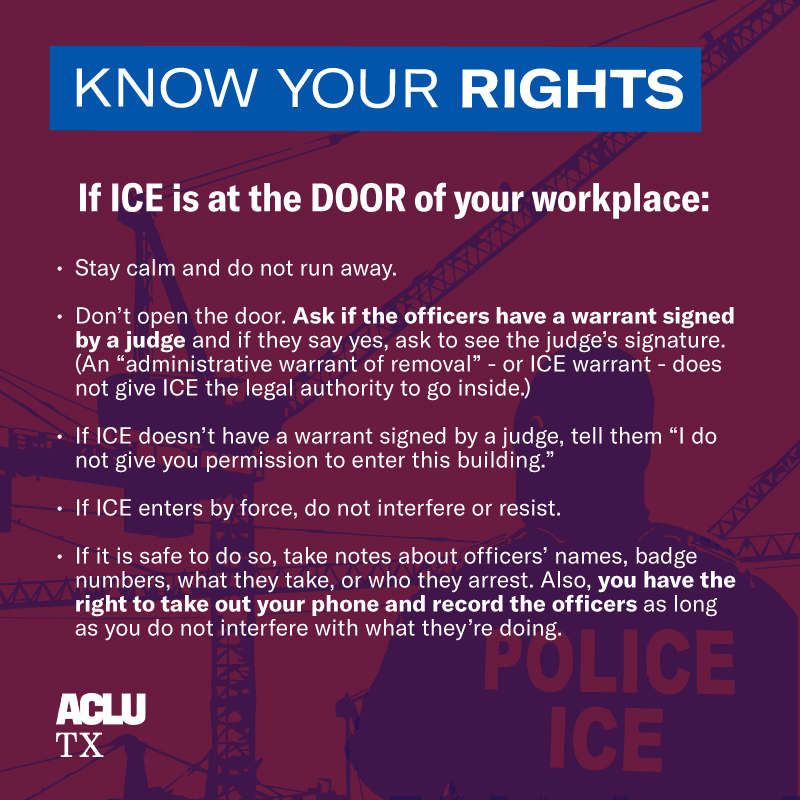
If ICE Is at the Door of Your Workplace
Stay calm
Do not run away. Staying calm helps you think clearly and protects your rights.
Don’t open the door
Ask officers if they have a warrant signed by a judge. If they say yes, ask to see the judge’s signature. An “administrative warrant of removal” or ICE warrant does NOT give ICE legal authority to enter the building.
If there is no judicial warrant
Say clearly: “I do not give you permission to enter this building.”
If ICE enters by force
Do not interfere or resist. Your safety comes first.
Document what happens
If it is safe to do so, take notes on officers’ names and badge numbers, what they take, and who they arrest. You have the right to record officers on your phone as long as you do not interfere with their actions.
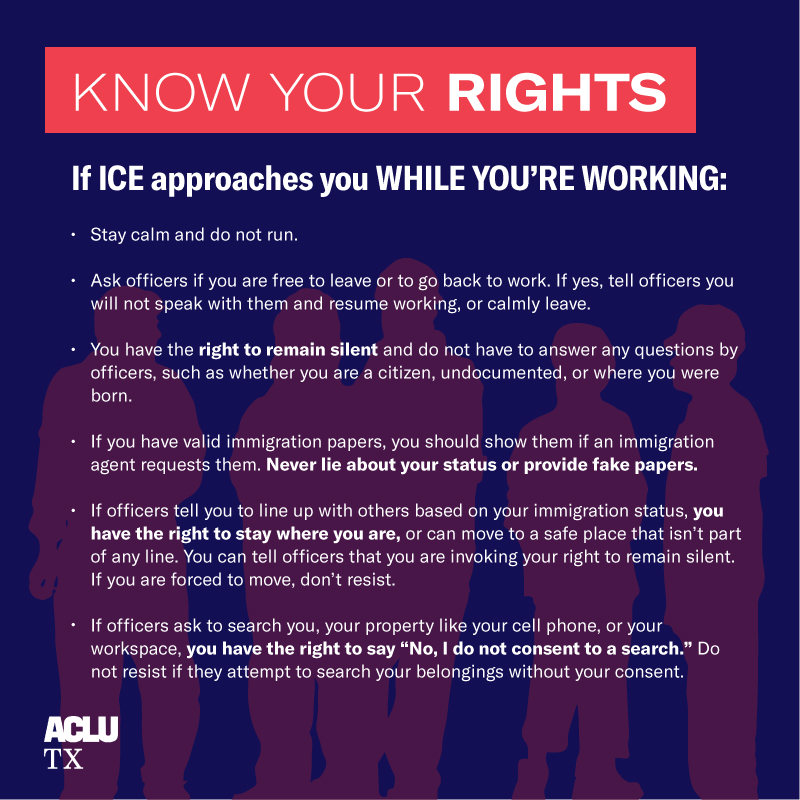
If ICE Approaches You While You Are Working
Stay calm
Do not run. Remain composed and know your rights.
Ask if you are free to leave
Ask officers: “Am I free to leave or go back to work?” If yes, tell them you will not speak with them and calmly resume working or leave.
Exercise your right to remain silent
You do not have to answer any questions — including whether you are a citizen, undocumented, or where you were born.
If you have valid immigration papers
Show them if an immigration agent requests them. Never lie about your status or present false documents.
If officers ask you to line up by status
You have the right to stay where you are or move to a safe place that is not part of any line. You may tell officers: “I am invoking my right against self-incrimination.” If you are forced to move, do not resist.
If officers ask to search you
Say: “No, I do not consent to a search.” This applies to your person, your cell phone, and your workspace. Do not resist if they attempt to search without your consent — but your verbal refusal is important for any future legal challenge.
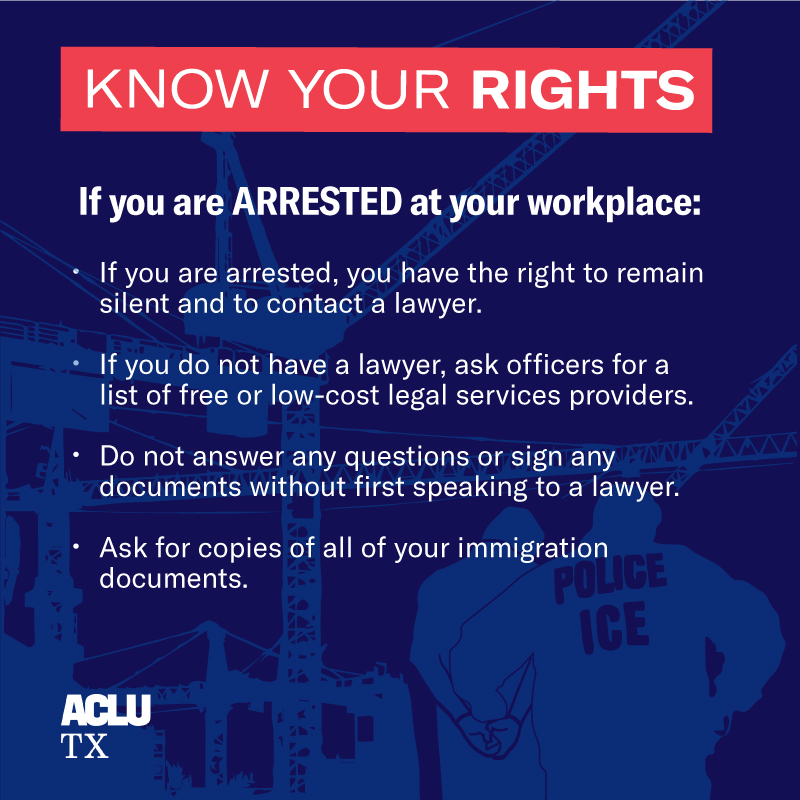
If You Are Arrested While at Work
Assert your right to remain silent
You have the right to remain silent and to contact a lawyer. Do not answer questions or explain your situation without an attorney present.
Ask for legal help
If you do not have a lawyer, ask officers for a list of free or low-cost legal service providers. You may also find providers at immigrationadvocates.org/legaldirectory.
Do not sign anything
Do not sign any documents without first speaking to a lawyer.
Ask for copies of your documents
Request copies of all of your immigration documents before they are taken.
Share These Tips With Your Community
Take the next step — share these Know Your Rights tips on social media or save them on your phone. Browse by scenario, available in English and Spanish:
- If you are arrested while at work
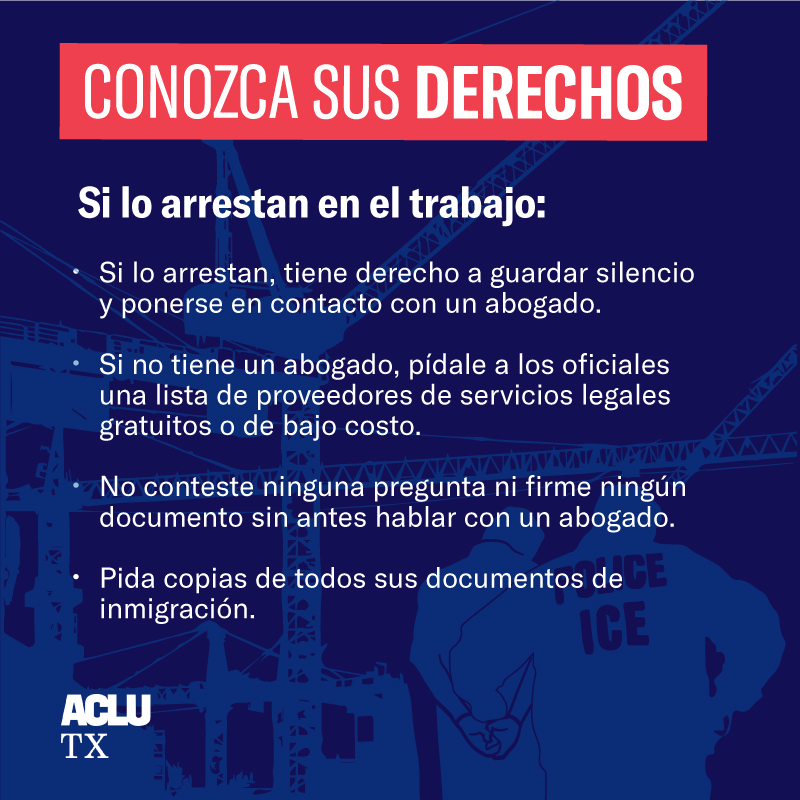
- Si lo arresten en el trabajo
- If immigration agents are at the door of your workplace
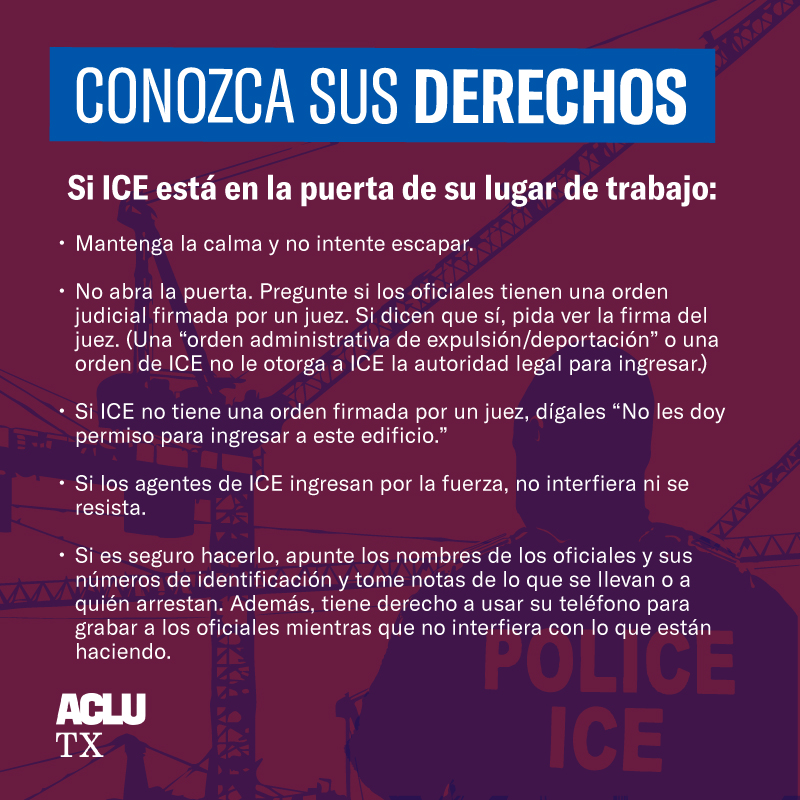
- Si ICE está en la puerta de su lugar de trabajo
- If immigration agents approach you while you are working
- Si ICE se le acerca mientras está trabajando

Published by the ACLU of Texas.